
Most dining establishments have front-of-house and waitstaff to attend to the needs of customers, including processing payments. But if you haven’t leveraged a POS system for your local restaurant, you’re missing out on significant benefits that can make all the difference in growing your business.
Here are seven ways that local restaurants can benefit from a POS system.

7 Benefits of Using a POS System In Your Local Restaurant
So, why exactly does your restaurant need a POS system?
1. Accurate, Real-Time Inventory Tracking
Inventory tracking is a primary function of POS systems and a clear advantage over a traditional cash register. But this feature is particularly important for restaurants because inventory typically consists of perishables.
To ensure the taste and quality of the food, kitchen staff and business owners must regularly track the shelf-life of stored ingredients. Many use the “first in, first out” technique to ensure that food items stored longer are lined up to be used next.
By leveraging the inventory tracking power of a POS solution, you can monitor your ingredient levels based on the menu items that have been ordered. Reduce the number of times you mark menu items as “unavailable” by making timely purchases and keeping your kitchen sufficiently stocked with best-selling items.
2. Efficient Order Tracking
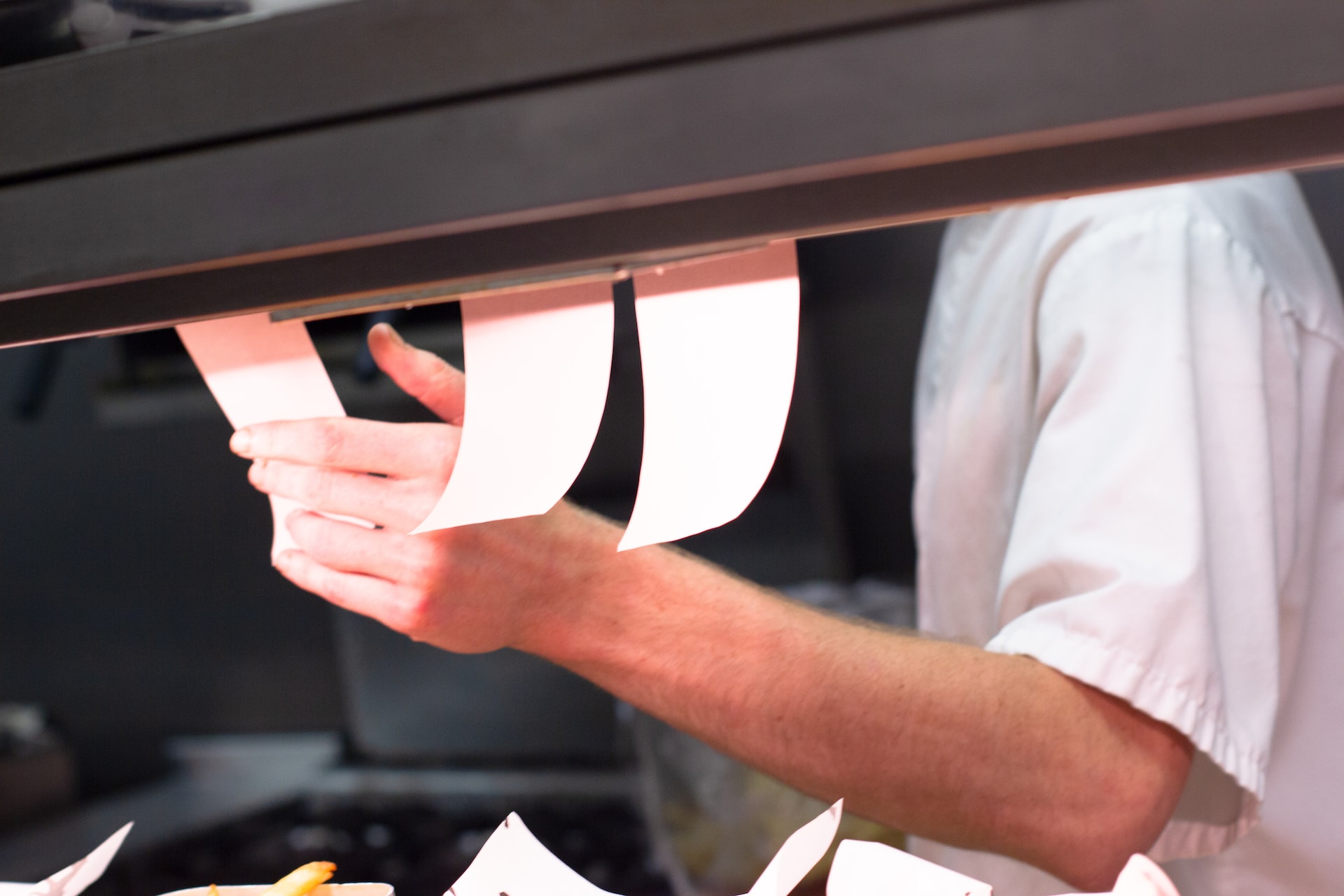
One of the most common restaurant mishaps is incorrect order-taking. In many traditional establishments, customers recite their orders to their waitstaff, who then manually write the orders and send tickets to the kitchen. This process is vulnerable to human error at several points:
- The waitstaff may make mistakes when recording the orders.
- Even if the waitstaff repeats the orders back to the table, the customers may not be paying attention.
- The waitstaff may be sidetracked by other tables on the way to the kitchen, delaying the relay of orders.
- If the order ticket is written, the kitchen staff may misunderstand the orders.
With a restaurant POS system, the orders can be sent directly to the kitchen, reducing the manual interaction between the waitstaff and kitchen staff. This ensures that orders are communicated instantly, and reduces the risk of inaccuracies. Many restaurant POS systems also enable customers to update or add to their orders, which are directly sent to the kitchen, minimizing the risk of miscommunication in the middle of creating an order.
3. Integrate Online Orders for Delivery and Curbside Pickup
The pandemic expedited the need for online and socially-distanced transactions — practices that continue to endure because they are effective and convenient.
Point-of-sale solutions are normally designed to integrate with third-party ordering platforms. This enables you to automate your online payment processing, helping to streamline the workflow into one seamless process.
4. Floor Management
Inefficient or incorrect seating can cost you money by reducing the number of customers you can accommodate and serve at a time. For example, if two people are seated at a table for four, you lose out on the opportunity to potentially serve, and earn, from two additional customers.
With a restaurant POS system, you can create a virtual map of your restaurant. This enables your hosts or front-of-house to check which tables are available, and seat customers efficiently. This also enables your business to accept table reservations online so that patrons can skip the queue and save time.
5. Staff Management
Another handy benefit of a trusted POS system is employee management. Many are equipped with a timesheet feature so that staff can clock in and out. Some are also built with scheduling functionality that lets business owners plan out their team roster for the week.
In the restaurant industry, it can be difficult to manage staff due to the extremely high turnover rate. For example, in 2021, the turnover rate in fast-food restaurants was 144%. An efficient rostering system via a POS solution can help ensure that you avoid overstaffing or understaffing certain shifts, providing fair opportunities and wages for your entire team.
6. Time-Saving Automation
Many of the previously mentioned POS benefits involve automating and streamlining processes, which can save time and effort for the business owner, as well as the restaurant staff.
Restaurants need to conduct regular and accurate inventory checks to ensure that the ingredients in stock are of good quality and sufficient for your menu offerings. Unfortunately, this process can be tedious and highly time-consuming. But with a restaurant POS system, orders are logged and transactions are recorded in real-time, so you know how many orders of a certain menu item were made. This allows you to gauge the remaining stock levels of a specific ingredient.
This may not necessarily eliminate the need for manual inventory checks, but it can help reduce the need for them. You can use your newfound free time on other critical tasks that can actively help increase growth and revenue.

7. Enhanced Customer Service
A modern restaurant POS system can enable you to digitize orders and have them sent directly to the kitchen. This minimizes the chances of getting orders wrong and allows customers to quickly make changes or additions without needing to flag the waitstaff.
This also helps unload your waitstaff, so they can focus on serving orders, keeping the space clean and orderly, addressing questions, and interacting with customers. Streamlining the workload of your staff may empower them to be more attentive toward and engaged with your customers.
Find the best restaurant POS system for your business with True POS. Contact us for a free quote today!